




Through My Eyes: Black Maternal Health

Through My Eyes: Black Maternal Health

Black maternal health has been a professional passion of mine since completing an internship focused on data informed policy solutions to Black maternal health issues while in graduate school. As a Black woman, it has also been a personal passion. When I became a mother in August of 2022, this issue only became dearer to my heart. I wanted to keep myself safe during pregnancy, labor, and postpartum and I want to find solutions that will keep my daughter safe once it’s time for her to become a mother.  

Black Maternal Health Week was first implemented by President Biden in 2021 (1). This week is focused on bring awareness to the pregnancy-associated health issues experienced by Black women in the United States. Maternal mortality, or pregnancy-related deaths, refer to any death during pregnancy or within the first year after birth that is caused by or exacerbated by pregnancy (2). National trends in the U.S. show that Black women have a maternal mortality rate 2.9 times higher than the maternal mortality rates for white or Hispanic women and, alarmingly, rates have increased since 2019 (3). In 2020, Indiana had the third highest maternal mortality rate in the entire country. Black Hoosier women had maternal mortality rates almost twice as high as white Hoosier women and almost three times as high as Hispanic Hoosier women (2). As a response, the Indiana state legislature passed SB 142 in 2018 (4) which established the maternal mortality review committee (MMRC). This committee is responsible for investigating the deaths of pregnant women or women up to 1 year postpartum, which are required to be reported by all health care providers in Indiana. Indiana cares about Black Maternal Health and has implemented state policies to improve it. The theme for Black Maternal Health Week this year is “Our Bodies Belong to Us: Restoring Black Autonomy and Joy”, and it is true – Black mothers can take control of their birthing experience.  

Lessons Learned

I’ve learned some things through my journey to motherhood that I’d like to share.  

1. Know Your Options. There are many different maternity care providers in Indiana, from traditional OB-GYNs to Advanced Practice Registered Nurses or Certified Nurse Midwives. Along with different providers, there are a variety of settings within which maternity care can be provided such as hospitals, birth centers and even within your own home. Don’t be afraid to shop around to find a provider that aligns with your values and your desires for your birth.  

The Bowen Center has published a detailed Maternity Care Workforce Assessment, which can be found here, and an accompanying brief, here. This resource details characteristics of all physicians or Advanced Practice Registered Nurses who report providing maternity care services. I personally chose to deliver in a hospital setting with a Certified Nurse Midwife. I also chose to have a doula as research seems to indicate the presence of a doula can reduce risk of maternal mortality and adverse birth outcomes (5,6) 

2. Be persistent. Diversity in medical providers can reduce risk of maternal mortality which led me to personally prioritize finding a provider that was from a racial minority group that is underrepresented in medicine (2,7). The Bowen Center has recently published a series of reports and briefs detailing diversity in a variety of healthcare professions. You can currently find the methodology here and the report on physicians here. Reports for registered nurses, pharmacists, dentists and other healthcare professionals are forthcoming.  

 In my own experience, I found it difficult to find a provider who accepted my insurance, was from a minority group and could see me without a long wait. I even switched my provider when I was 8 months pregnant because I felt I wasn’t in alignment with my first one. Be persistent, and don’t be afraid of uncomfortable conversations.  The payoff of having a maternity care provider who aligns with your values is worth the effort required for your best experience during pregnancy and childbirth.  

3. Prepare for postpartum. I spent a lot of time preparing for birth and preparing for bringing my sweet baby home, but not a lot of time preparing for my postpartum experience. The postpartum experience can be very difficult as you physically heal from giving birth, deal with sleeping less than before, adjust to your new role as a mother AND learn to care for a baby! It’s imperative that mothers have access to resources to deal with these changes. In 2022, Indiana passed HB 1140 which extended pregnancy Medicaid coverage to 1 year past birth to help ensure access to healthcare services during this sensitive time (8). Each legislative session, the Bowen Center posts bi-weekly updates on the progress of bills, like HB 1140, that are related to health or the health workforce. Whether it’s a health care provider to check on you physically or mentally, or a postpartum doula to help with laundry and the dishes, don’t be afraid to ask for help. There are options available for you.  

Becoming a mother has been the most joyful and fulfilling experience of my life and getting to watch my beautiful baby girl learn and grow is the best part of my life. Every mother deserves to experience that. I am very thankful to work on projects that highlight opportunities to enhance health workforce diversity. In fact, I am honored to have the opportunity to speak on this topic at my first national conference in Washington D. C. in May. I hope that the health workforce research I am involved in will improve Black maternal health enough that my daughter will not face the challenges that I faced when searching for a Black maternity care provider who shared my same vision for my birth.  

Be well.  

-Mykayla Tobin

Sources:

1. A Proclamation on Black Maternal Health Week 2021. Available at https://www.whitehouse.gov/briefing-room/presidential-actions/2021/04/13/a-proclamation-on-Black-maternal-health-week-2021/

2. Maternal Mortality in Indiana. Available at https://policyinstitute.iu.edu/doc/maternal-mortality-brief.pdf

3. Maternal Mortality Rates in the United States, 2020. Available at https://www.cdc.gov/nchs/data/hestat/maternal-mortality/2020/maternal-mortality-rates-2020.htm

4. Senate Bill 142. Available at https://iga.in.gov/legislative/2018/bills/senate/142

5. Advancing Birth Justice. Available at https://everymothercounts.org/wp-content/uploads/2019/03/Advancing-Birth-Justice-CBD-Models-as-Std-of-Care-3-25-19.pdf

6. Doula care across the maternity care continuum and impact on maternal health. Available at https://www.thelancet.com/journals/eclinm/article/PIIS2589-5370(22)00261-9/fulltext

7. Nurse workforce diversity and reduced risk of severe adverse maternal outcomes. Available at https://www.ajogmfm.org/article/S2589-9333(22)00121-5/fulltext#relatedArticles

8. House Bill 1140. Available at https://iga.in.gov/legislative/2022/bills/house/1140
Bowen Director Dr. Hannah Maxey provides expert testimony on strengthening the community and home-based care workforce to the U.S. Senate

Bowen Director Dr. Hannah Maxey provides expert testimony on strengthening the community and home-based care workforce to the U.S. Senate

Bowen Director Dr. Hannah Maxey

Bowen Director Dr. Hannah Maxey provided expert testimony to the United States Senate Special Committee on Aging on March 9, 2023. Her presentation focused on strengthening the home and community-based care workforce, a critical component of support for aging Americans. Dr. Maxey highlighted various state-led initiatives to improve home care services, including standardizing worker titles and training, implementing portable credentials, and enhancing wages and benefits.

Emphasizing the crucial role of states in this effort, Dr. Maxey stated, “States have a critical role in reinforcing the front line of our nation’s communities of care.” She stressed the importance of data collection to inform workforce planning and policy decisions, noting that “Data is the foundation of informed workforce policy.” Dr. Maxey also addressed the challenges faced by the workforce, including low wages and the potential loss of benefits as wages increase, known as the “benefits cliff.”

Reflecting on the universal importance of this issue, Dr. Maxey remarked, “Time waits for no man. The issues of the aging are the issues of us all.” She concluded by underlining the significance of the home care workforce in supporting seniors and the ongoing need for efforts to bolster this essential component of community care, saying, “At some point in our lives, many of us will rely on this workforce, for a loved one or even for ourselves.”

Read Dr. Maxey’s full testimony here

Watch Dr. Maxey’s testimony here on the U.S. Senate Special Committee on Aging website (begins around the 43:00 minute mark)

Data Dump on Indiana’s Nurses in 2023

Data Dump on Indiana’s Nurses in 2023

In the last month the Bowen Center has published our two bi-annual data and brief reports from license renewals, but also two separate briefs. These two extra briefs look at how the Demand for RNs is expected to grow (our RN Demand Brief) and Licensing of APRNs, how Indiana does it versus how other states in the United States regulate these professionals (APRN licensure brief).

So to keep you in the loop on all things nursing, we’re going to do a quick overview of each of our nursing workforce materials that are hot off the press.

2021 Indiana’s Registered Nurse Workforce Brief

Take a dive into Indiana’s RN workforce. Explore trends, demographics, education, employment plans, practice characteristics, and policy connections. New sections look deeper into hospital-based, school-based, public health, and LTSS-based RNs.

2021 Indiana Registered Nurse Workforce Brief

2021 Indiana’s Registered Nurse Workforce Data Report

2021 Indiana’s Advance Practice Workforce Brief

Explore trends in Indiana’s APRN workforce. This brief also covers demographics, education, employment plans, practice characteristics, and policy connections.

2021 Indiana Advanced Practice Registered Nurse Workforce Brief

Advanced Practice Registered Nurse Licensing: Indiana’s Current Environment & Other State Approaches

Current Indiana law requires that all APRNs be licensed as Registered Nurses (RNs) and meet certain educational criteria to provide APRN-level services in their respective APRN role. An estimated one-fourth (28.8%) of RNs self-identified as APRNs but do not hold any additional licenses or authorities, and are providing advanced nursing care under their RN license. The absence of an advanced license for all APRNs in Indiana, regardless of prescriptive authority, poses some challenges for policymakers and the public.

Indiana’s approach to occupational regulation for APRNs is relatively unique. A 50-state review of APRN regulation determined that only one other state has a similar approach. The brief presents four (4) other approaches to APRN licensure and identifies considerations for each approach in terms of intersection with prescriptive authority, consumer perspectives, impact on practicing professionals, and administrative feasibility.

Advanced Practice Registered Nurse Licensing: Indiana’s Current Environment & Other State Approaches

RN Demand Brief

Over the next ten years, workforce projections estimate that demand for RNs jobs will increase by 30%. This brief examines the specifics of this predictions and breaks down that demand at a county-level. We hope this resource will give policymakers and stakeholders information to support planning for Indiana’s future nursing workforce

Indiana Registered Nurse Workforce Demand Brief

Nursing-related Bills in 2023

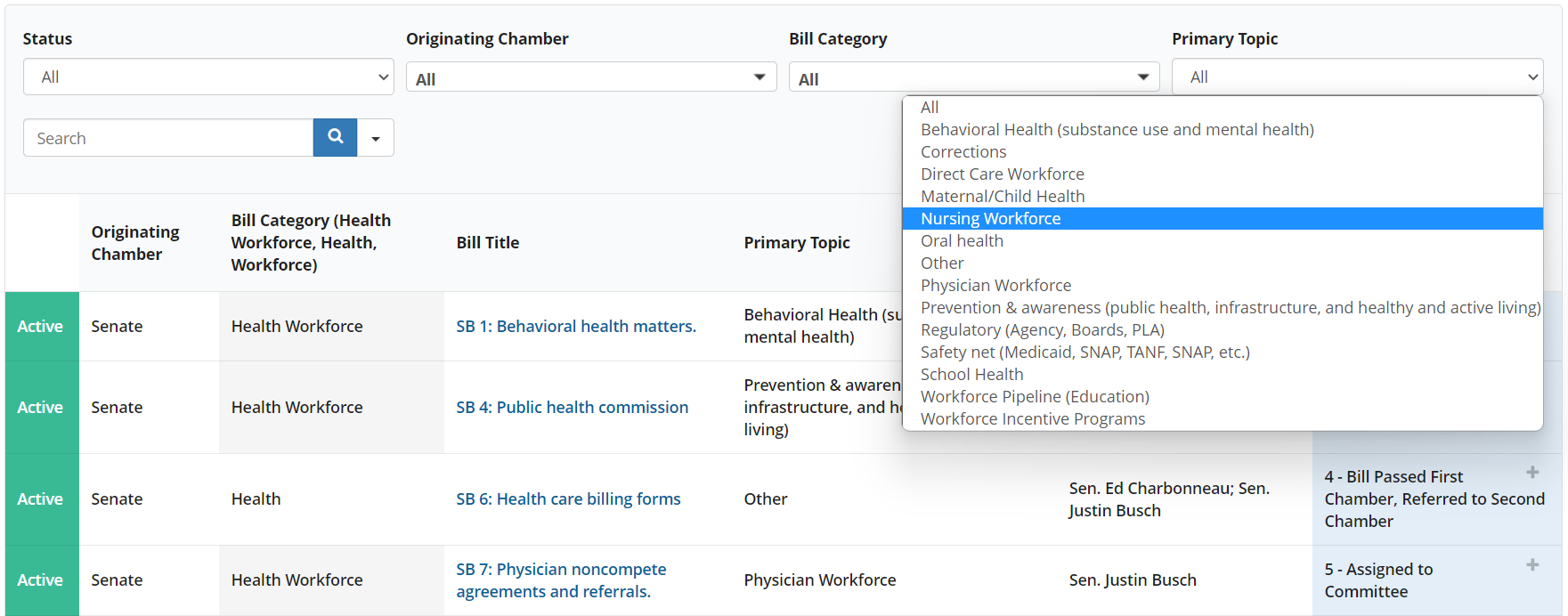
View our Bi-weekly Bill Brief to track Nursing Legislation.

Under the Primary topic tab, select “nursing workforce” or use the search bar to find related legislation.

Track these bills and more in our bi-weekly bill brief

Indiana 2023 General Assembly & Health Committees

Indiana 2023 General Assembly & Health Committees

Indiana’s 2023 Legislative session has started! Here is how the Indiana General Assembly is divided and who is on the health committees.

For updates on health-related legislation in the 2023 session, check out our Bi-weekly Bill Brief (B4), starting mid-January!

Indiana Senate

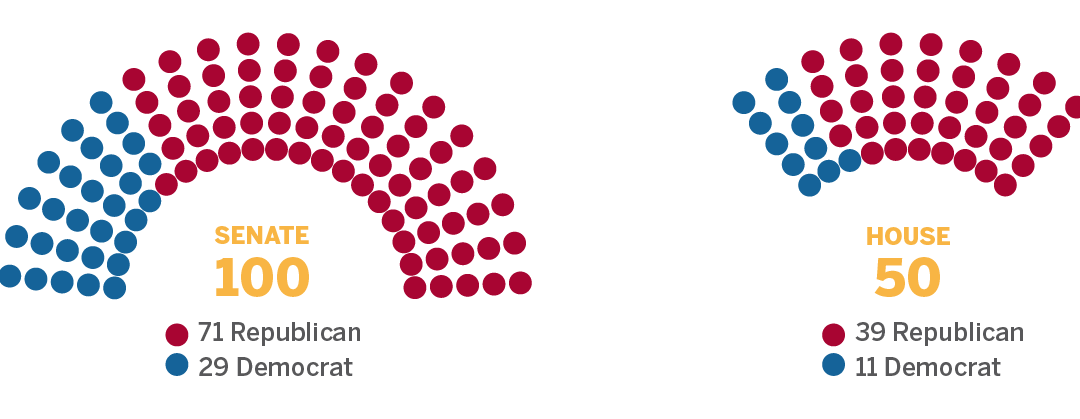
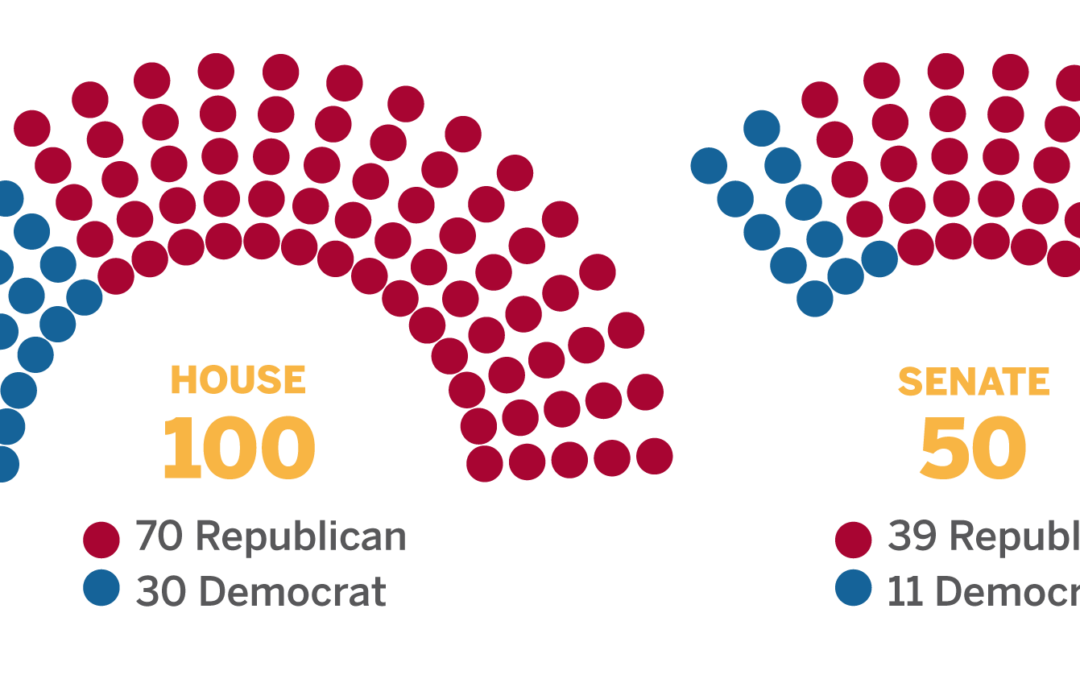
The 50 seats in the senate are divided with Republicans in the majority.
Republicans: 40
Democrats: 10

Indiana House

The 100 seats in the house are divided with Republicans in the majority.
Republican: 70
Democrats: 30

Who are the legislators on Indiana’s standing health committees?

Senate: Health and Provider Services Committee

All information provided on each senator was collected from their respective party’s websites.

Republican Senators: https://www.indianasenaterepublicans.com/senators

Democrat Senators: https://www.indianasenatedemocrats.org/senators/

Marjority Members

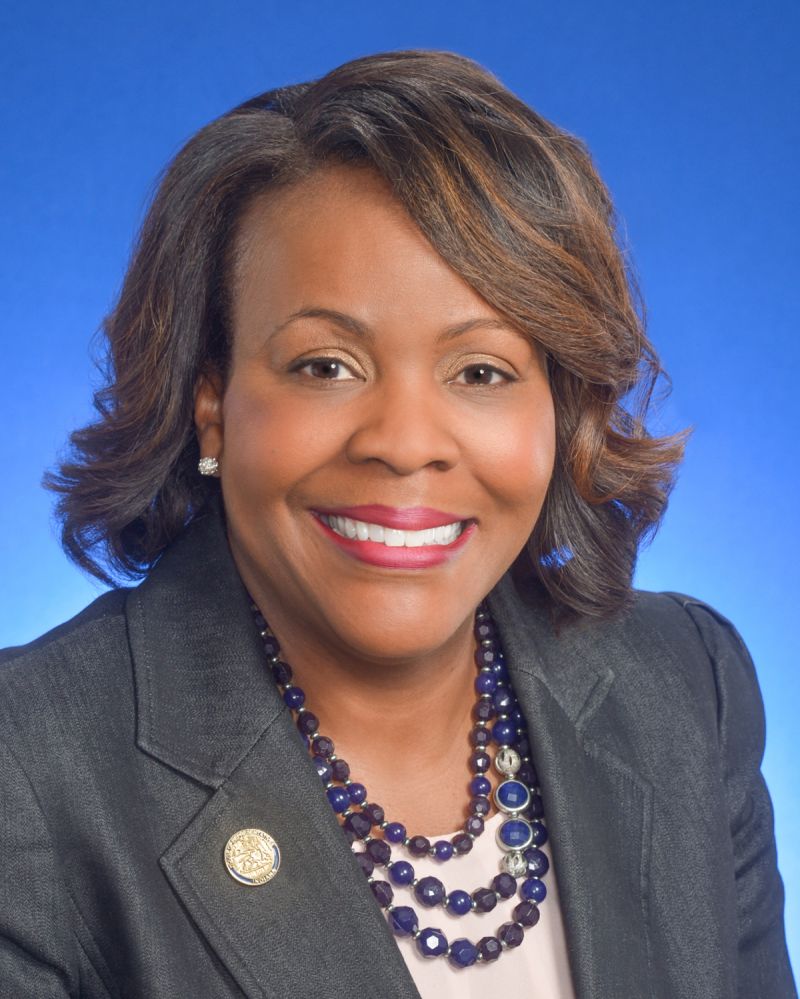
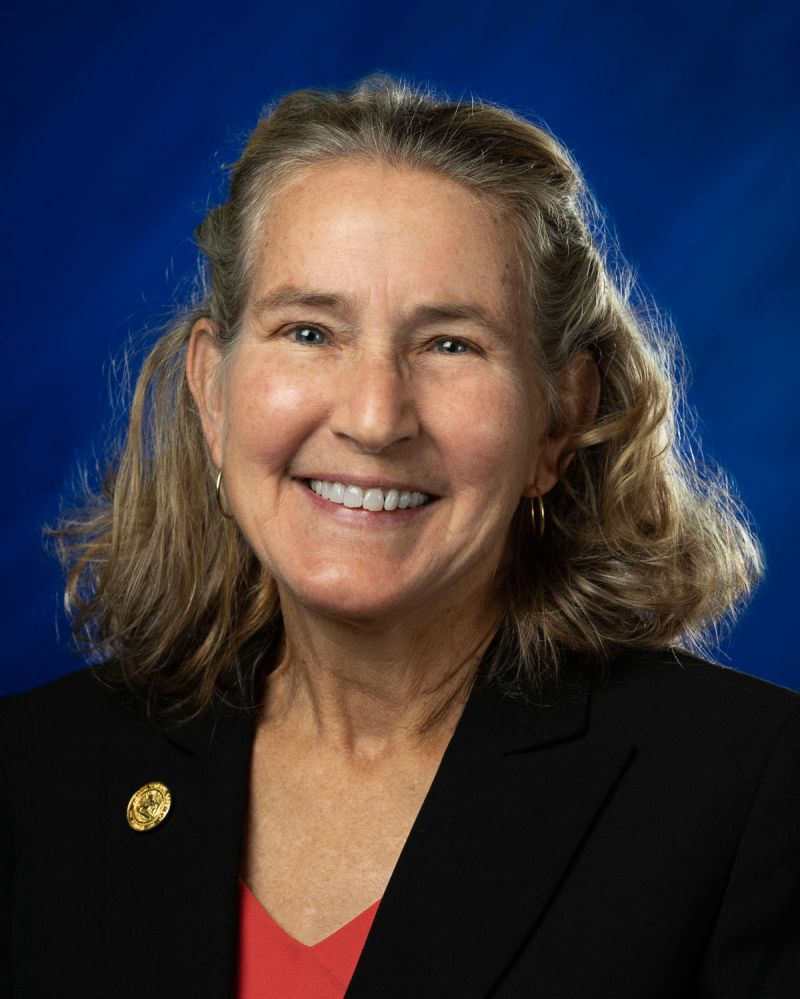
Chair: Ed Charbonneau, Senator District 5

Ranking Member: Justin Busch, Senator District 16

Vaneta Becker, Senator District 50

Mike Boheck, Senator District 8

Liz Brown, Senator District 15

Michael Crider, Senator District 28

Stacey Donato, Senator District 18

Tyler Johnson, Senator District 14

Jean Leising, Senator District 42

Minority Members

Ranking Minority Member: Jean D. Breaux,  ,Senator District 34

Eddie D. Melton, Senator District 3

Shelli Yoder, Senator District 40

House: Public Health

All information provided on each house representative was collected from their respective party’s websites.

Republican Representatives: https://www.indianahouserepublicans.com/members/

Democrat Representatives: https://indianahousedemocrats.org/members

Majority Members

Chair: Brad Bartlett, Representative District 56

Vice Chair: Donna Schaibley, Representative District 24

Robert Behning, Representative District 91

Martin Carbaugh, Representative District 81

Matt Hostettler, Representative District 64

Joanna King, Representative District 49

Cindy Ledbetter, Representative District 75

Ann Vermilion, Representative District 31

Denny Zent, Representative District 51


Minority Members

Ranking Minority Member: Robin Shackleford, Representative District 98

Rita Fleming, Representative District 71

Ryan Hatfield, Representative District 77

Gregory Porter, Representative District 96

Want more Policy?

Learn about the Bowen Center’s role in policy and more. To view our published policy resources visit the Bowen library and filter by topic area “policy.”

Related Posts

A Regulatory Review of APRN Oversight in Indiana

A Regulatory Review of APRN Oversight in Indiana

As of 2023, there were 9,134 Advanced Practice Registered Nurses (APRN) reported to be practicing in Indiana. These APRNs include Nurse Practitioners (NP), Clinical Nurse Specialists (CNS), Certified Nurse Midwives (CNM), and Certified Nurse Anesthetists (CRNA). APRNs...

Is there a shortage of LPNs in Indiana?

Is there a shortage of LPNs in Indiana?

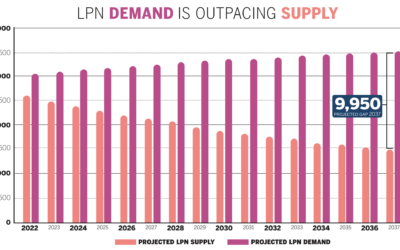
The Bowen Center recently analyzed state and national trends to examine whether Indiana faces a shortage of Licensed Practical Nurses now and into the future. Check out the findings below:       You can also read or download the above in PDF form...

The Upcoming 2023 Legislative Session

The Upcoming 2023 Legislative Session

The Bowen Center has monitored Indiana health workforce legislation for the past five legislative sessions through its  Bowen Bi-Weekly Bill Brief  or “B4.” In 2022, the Bowen Center rolled out a re-designed B4 to enhance the accessibility of customized information for users. Users can now search for keywords of interest and filter by topic or primary bill sponsor. Below are this year’s topical categories for health workforce-related legislation: (Note: in the instance, a bill may fall under multiple categories, it is assigned to a primary topic) 

  • Behavioral Health (substance use and mental health),
  • Corrections
  • Direct Care Workforce
  • Maternal/Child Health
  • Nursing Workforce
  • Oral health
  • Other
  • Physician Workforce
  • Prevention & awareness (public health, infrastructure, and healthy and active living)
  • Regulatory (Agency, Boards, PLA)
  • Safety net (Medicaid, SNAP, TANF, SNAP, etc.)
  • School Health
  • Workforce Pipeline (Education)
  • Workforce Incentive Program

The Bowen Bi-Weekly Bill Brief is just one way the Bowen Center seeks to provide stakeholders with high-quality, objective information about Indiana’s health workforce. Through the Bowen Library, you can stay in the know about Indiana’s health workforce professions through bi-annual health workforce data reports, policy briefs, and more.    


As we all prepare for the upcoming legislative session, you can familiarize yourself with Indiana legislators and how a bill becomes law in Indiana from our Policy 101 page. 

Want more Policy?

Learn about the Bowen Center’s role in policy and more. To view our published policy resources visit the Bowen library and filter by topic area “policy.”

Related Posts

A Regulatory Review of APRN Oversight in Indiana

A Regulatory Review of APRN Oversight in Indiana

As of 2023, there were 9,134 Advanced Practice Registered Nurses (APRN) reported to be practicing in Indiana. These APRNs include Nurse Practitioners (NP), Clinical Nurse Specialists (CNS), Certified Nurse Midwives (CNM), and Certified Nurse Anesthetists (CRNA). APRNs...

Is there a shortage of LPNs in Indiana?

Is there a shortage of LPNs in Indiana?

The Bowen Center recently analyzed state and national trends to examine whether Indiana faces a shortage of Licensed Practical Nurses now and into the future. Check out the findings below:       You can also read or download the above in PDF form...

How is Indiana’s State Government Divided in 2022?

How is Indiana’s State Government Divided in 2022?

Indiana’s last election was November 3, 2020 and the next election is November 3, 2022

Indiana Senate

The 50 seats in the senate are divided with Republicans in the majority.
Republicans: 39
Democrats: 11

Indiana House

The 100 seats in the house are divided with Republicans in the majority.
Republican: 71
Democrats: 21

Who are the legislators on Indiana’s standing health committees?

Senate: Health and Provider Services Committee

All information provided on each senator was collected from their respective party’s websites.

Republican Senators: https://www.indianasenaterepublicans.com/senators

Democrat Senators: https://www.indianasenatedemocrats.org/senators/

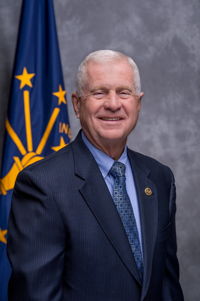
Ed Charbonneau, Chair

Ed Charbonneau, Chair

[R] - District 5

Sen. Charbonneau also serves on the Ethics, Appropriations, Rules and Legislative Procedure, and Tax and Fiscal Policy standing committees.

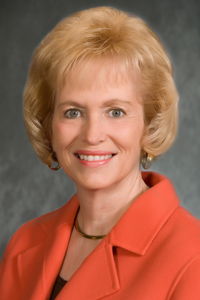
Vaneta Becker, Ranking Member

Vaneta Becker, Ranking Member

[R] - District 50

Sen. Becker also serves on the Local Government and Public Policy standing committees.

Liz Brown, Majority Member

Liz Brown, Majority Member

[R] - District 15

Sen. Brown also serves on the Judiciary, Appropriations, Ethics standing committees, and the School Funding Subcommittee.

Justin Busch, Majority Member

Justin Busch, Majority Member

[R] - District 16

Sen. Busch also serves on the Agriculture, Corrections and Criminal Law, and Natural Resources standing committees.

Michael Crider, Majority Member

Michael Crider, Majority Member

[R] - District 28

Sen. Crider also serves on the Homeland Security and Transportation, Veterans Affairs and the Military, Appropriations, and Rules and Legislative Procedure standing committees.

Stacey Donato, Majority Member

Stacey Donato, Majority Member

[R] - District 18

Sen. Donato also serves on the Commerce and Technology, Education and Career Development, Elections, Family and Children Services, and Utilities standing committees.

Ronald Grooms, Majority Member

Ronald Grooms, Majority Member

[R] - District 46

Sen. Groom brings experience to the committee as a Pharmacist. Sen. Grooms also serves on the Family & Children Services, Elections, and Public Policy standing committees.

Jean Leising , Majority Member

Jean Leising , Majority Member

[R] - District 42

Sen. Leising brings experience to the committee as a retired nurse. Sen. Leising also serves on the Agriculture, Natural Resources, Commerce and Technology, Education and Career Development, and Utilities standing committees.

Ryan Mishler, Majority Member

Ryan Mishler, Majority Member

[R] - District 9

  • Sen. Mishler also serves on the Appropriations and Tax & Fiscal Policy standing committees as well as the State Budget Committee.
Jean Breaux, Ranking Minority Member

Jean Breaux, Ranking Minority Member

[D] - District 34

Sen. Breaux also serves on the Agriculture, Commerce and Technology, Natural Resources, Public Policy, and Utilities standing committees.

Eddie Melton, Minority Member

Eddie Melton, Minority Member

[D] - District 3

Sen. Melton also serves on the Appropriations, Education and Career Development, Environmental Affairs standing committees, as well as the School Funding Subcommittee.

Shelli Yoder, Majority Member

Shelli Yoder, Majority Member

[D] - District 40

Sen. Yoder also serves on the Commerce and Technology, Education and Career Development, Environmental Affairs, and Utilities standing committees.

House: Public Health

All information provided on each house representative was collected from their respective party’s websites.

Republican Representatives: https://www.indianahouserepublicans.com/members/

Democrat Representatives: https://indianahousedemocrats.org/members

Brad Barrett, Chair

Brad Barrett, Chair

[R] - District 56

Rep. Barrett brings medical experience to the committee as a retired general surgeon.

Rep. Barrett also serves on the Agriculture and Rural Development standing committee

Julie Olthoff, Vice Chair

Julie Olthoff, Vice Chair

[R] - District 19

Rep. Olthoff also serves on the Family, Children and Human Affairs, and Veterans Affairs and Public Safety standing committees.

Don Lehe, Majority Member

Don Lehe, Majority Member

[R] - District 25

Rep. Lehe also serves on the Agriculture and Rural Development and Environmental Affairs standing committees.

Matt Lehman, Majority Member

Matt Lehman, Majority Member

[R] - District 79

  • Rep. Lehman also serves on the Financial Institutions and Insurance and Public Policy standing committees.
J. Michael Davisson, Majority Member

J. Michael Davisson, Majority Member

[R] - District 73

Davisson also serves on the Agriculture and Rural Development and Commerce standing committees.

Donna Schaibley , Majority Member

Donna Schaibley , Majority Member

[R] - District 24

Rep. Schaibley also serves on the Courts and Criminal Code and Financial Institutions and Insurance standing committees.

Ann Vermillion, Majority Member

Ann Vermillion, Majority Member

[R] - District 31

Rep. Vermillion brings experience to the committee with her history at a health care and public health consulting firm.

Rep. Vermillion also serves on the Family, Children and Human Affairs and Elections and Apportionment standing committees.

Dennis Zent, Majority Member

Dennis Zent, Majority Member

[R] - District 51

Rep. Zent is a retired endodontist and brings a medical background to the committee.

Rep. Zent also serves on the Local Government and Veterans Affairs and Public Safety standing committees.

Cindy Ziemke, Majority Member

Cindy Ziemke, Majority Member

[R] - District 55

Rep. Ziemke also serves on the Courts and Criminal Code and Employment, Labor, and Pensions standing committees.

Robin Shackleford, Ranking Minority Member

Robin Shackleford, Ranking Minority Member

[D] - District 98

  • Rep. Shackleford also serves on the Courts and Criminal Code and Financial Institutions and Insurance standing committees.
Rita Fleming, Minority Member

Rita Fleming, Minority Member

[D] - District 71

Rep. Fleming brings experience to the committee as a former RN/NP and obstetrician/gynecologist.

Rep. Fleming also serves on the Commerce, Small Business and Economic Development and Natural Resources standing committees.

Ryan Hatfield , Minority Member

Ryan Hatfield , Minority Member

[D] - District 77

Rep. Hatfield also serves on the Employment, Labor and Pensions, Judiciary, and Utilities, Energy and Telecommunications standing committees.

Gregory Porter , Majority Member

Gregory Porter , Majority Member

[D] - District 96

Rep. Porter also serves on the Ways and Means and Financial Institutions and Insurance standing committees.

Want more Policy?

Learn about the Bowen Center’s role in policy and more. To view our published policy resources visit the Bowen library and filter by topic area “policy.”

Related Posts

A Regulatory Review of APRN Oversight in Indiana

A Regulatory Review of APRN Oversight in Indiana

As of 2023, there were 9,134 Advanced Practice Registered Nurses (APRN) reported to be practicing in Indiana. These APRNs include Nurse Practitioners (NP), Clinical Nurse Specialists (CNS), Certified Nurse Midwives (CNM), and Certified Nurse Anesthetists (CRNA). APRNs...

Is there a shortage of LPNs in Indiana?

Is there a shortage of LPNs in Indiana?

The Bowen Center recently analyzed state and national trends to examine whether Indiana faces a shortage of Licensed Practical Nurses now and into the future. Check out the findings below:       You can also read or download the above in PDF form...