

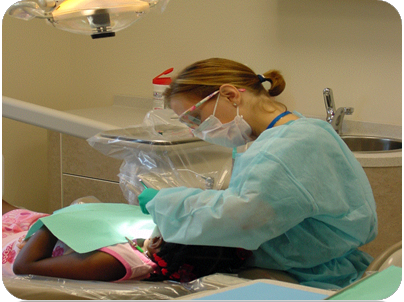
Featured Image: Bowen Center for Health Workforce Research and Policy Director Dr. Hannah Maxey providing dental care to a child in 2002.
February is a big month for teeth, all kinds of teeth! As we celebrate both National Children’s Dental Health Month and National Pet Dental Health Month, I find myself reflecting on my journey from dental hygienist to health workforce researcher, and why oral health still holds a special place in my heart (and my professional focus).
For nearly a decade, I practiced dental hygiene in public health clinics in Marion County, Indiana. I scaled tartar, taught proper brushing techniques to wiggly kindergarteners, and yes, occasionally dodged flying spit. It was hands-on, meaningful work that shaped how I think about healthcare access today. Those clinical years taught me something fundamental: Oral health isn’t separate from overall health. It’s the gateway.
Fast forward to today. I lead the Bowen Center for Health Workforce Research and Policy. I’ve traded my scalers for spreadsheets, but the mission hasn’t changed. Whether we’re talking about children who need preventive care or pets whose owners finally notice that doggy breath isn’t normal, access depends on having the right professionals in the right places.
Here’s what keeps me engaged: The workforce challenges are strikingly similar across the board. Pediatric dentists? There aren’t enough, especially in rural areas. Veterinary dentists? Even rarer. Dental hygienists who can practice in schools or community settings? Still fighting scope-of-practice in many states. The problems I witnessed as a practicing hygienist are the same ones I’m researching now, just with better data and hopefully more impact on policy.
Children’s oral health is particularly close to my heart. Dental disease remains the most common chronic childhood condition, yet it’s almost entirely preventable. When kids can’t access care because there aren’t enough providers or dental professionals can’t practice to the full extent of their training, that’s a workforce problem with real health consequences.
And our pets? They deserve better, too. Veterinary dental disease affects an estimated 80% of dogs and 70% of cats by age three, yet many pet owners don’t realize dental care is essential preventive medicine. The veterinary workforce faces similar shortages and geographic maldistribution as human healthcare.
This February, as I celebrate both these dental health months, I’m reminded why I loved clinical practice and why I’m passionate about workforce policy. The work I do now (tracking provider shortages, analyzing scope-of-practice regulations, informing policy decisions) all connects back to those days in the clinic, to the patients (both two-legged and four-legged) who need care, and to the dedicated professionals trying to provide it.
Some roots run deep. Mine just happen to start with health teeth and extend to caring about them in humans and animals alike.

Saint, our golden retriever puppy, smiling with healthy teeth in 2026.