Indiana's Mental Health Crisis in a Nutshell


Mental Health Counselors
Marriage and Family Therapists
Social Workers
Addiction Counselors
Although other health care providers – such as primary-care physicians and nurse practitioners – have a role in supporting the mental and behavioral health of Hoosiers, the shortage of professionals whose practice focuses only on mental and behavioral health services will be the focus of this project.


The pathways from education to clinical practice are much more complex for selected Indiana professions licensed by the BHHS board and in some cases, include specific provisions related to course content and overlapping requirements related to degree programs. For example, a masters in psychology potentially qualifies an individual for licensure application as a LMHC, LCAC, and LMFT, based on specific courses as outlined in statute.

For some professions, the pathway from education to licensure is straightforward. In Indiana, psychiatrists and psychiatric mental health nurse practitioners are licensed as physicians and registered nurses, respectively. No additional state licenses are required for clinical practice.

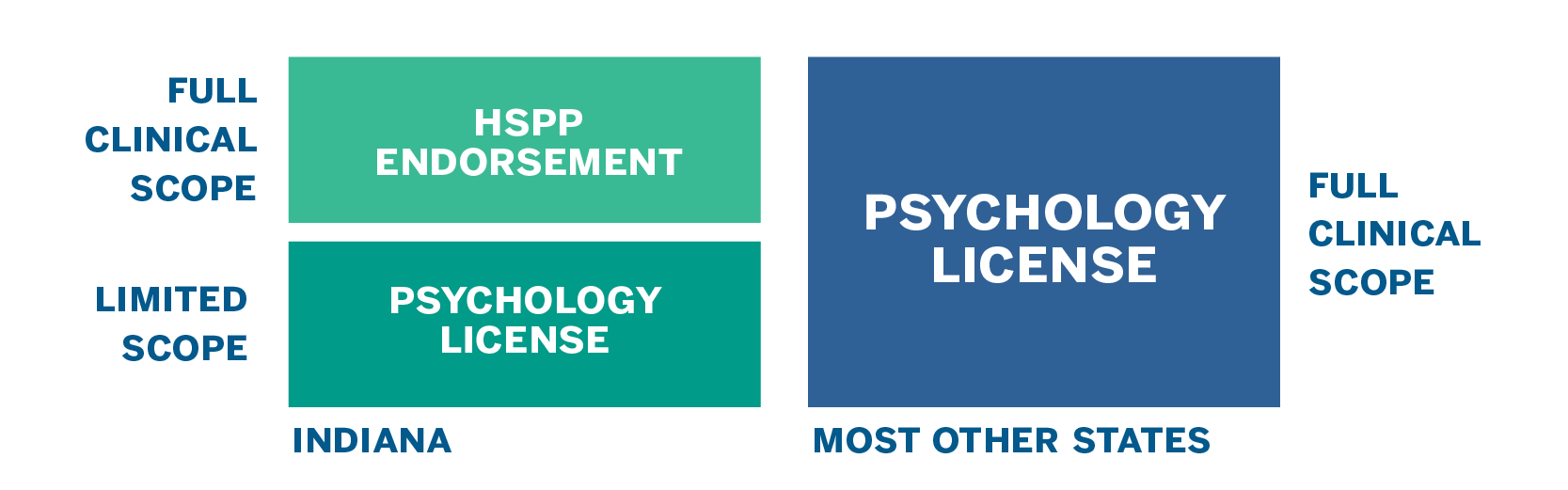
The pathway from education to independent clinical licensure for psychologists is slightly different. Psychologists are first required to obtain a license and then apply for a separate endorsement as a Health Services Provider in Psychology.
Workforce one-pagers, created as part of the Playbook Project, help clarify the pipeline to practice pathway for mental and behavioral health professions in Indiana.
A national scan of 50-state policy reviews for mental and behavioral health professions was completed to identify how Indiana policy compares. Information from the national scan helped to identify areas where Indiana might align with other states.